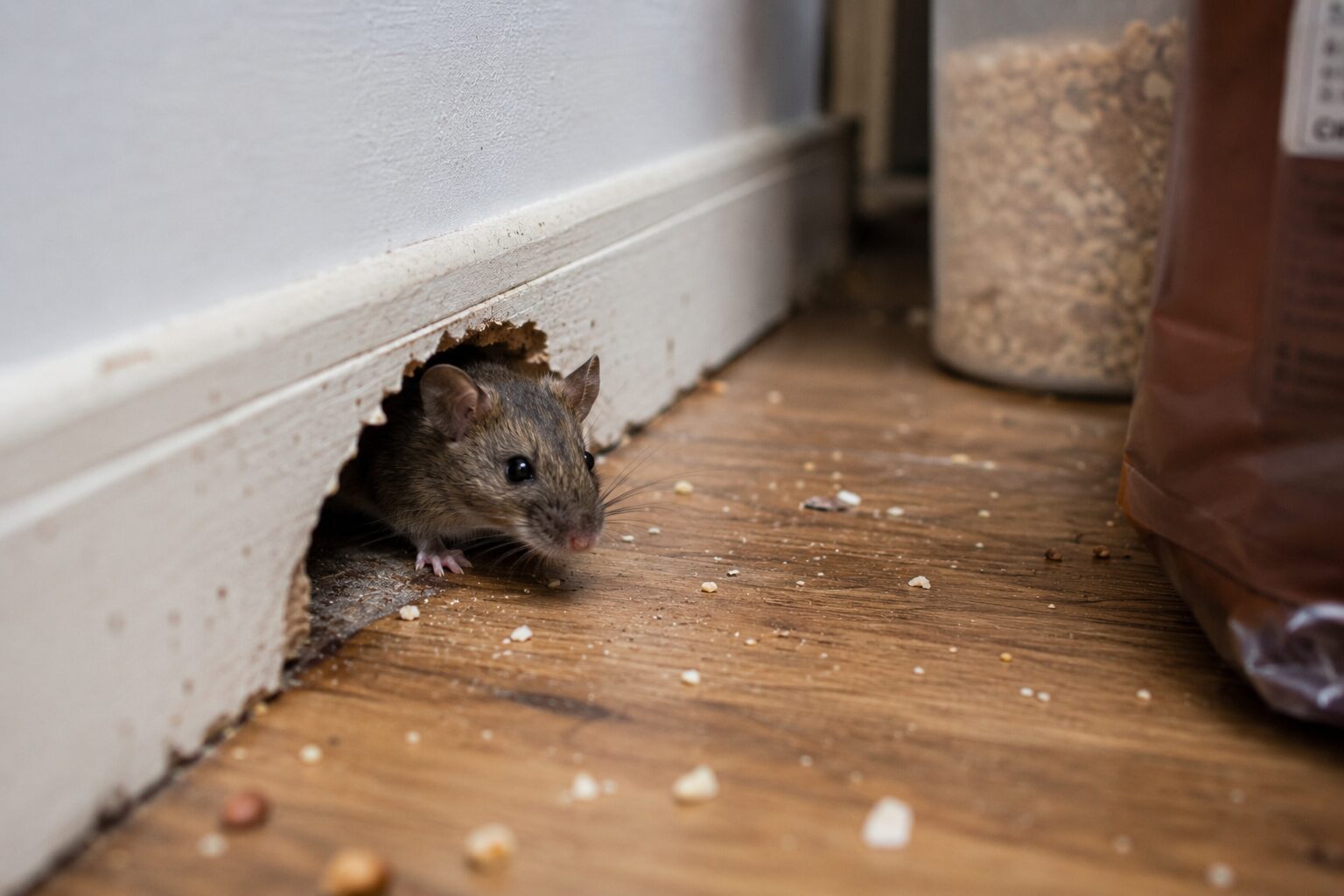
Few things make homeowners more uncomfortable than discovering rodents inside the house. Rats and mice are among the most common pest problems throughout the Pacific Northwest, especially during colder and wetter months when rodents begin searching for warmth, food, and shelter indoors.
One of the biggest challenges with rodent infestations is that they often begin quietly and out of sight. By the time homeowners actually see a rat or mouse, the infestation may already be much larger than expected. Rodents are highly skilled at staying hidden inside walls, attics, crawlspaces, insulation, garages, and storage areas.
Recognizing the early warning signs of rodent activity can help homeowners address the problem before it becomes a larger infestation that causes significant contamination or property damage.
Scratching or Movement Inside Walls and Ceilings
One of the most common early signs of rodents is hearing unusual noises inside the home.
Rats and mice are often most active at night when the house is quiet. Homeowners may hear:
- Scratching sounds
- Light scurrying
- Gnawing noises
- Movement in ceilings
- Activity inside walls
- Sounds coming from crawlspaces or attics
Mice tend to make lighter, quicker noises, while rats often sound heavier and more deliberate.
These sounds are especially common:
- Shortly after sunset
- During late-night hours
- Early in the morning
- During colder weather
Because rodents prefer staying hidden, these noises are often one of the first indicators homeowners notice.
Rodent Droppings Around the Home
Droppings are one of the clearest signs of rodent activity.
Rodents commonly leave droppings near:
- Food storage areas
- Kitchen cabinets
- Pantries
- Garages
- Attics
- Crawlspaces
- Baseboards
- Under sinks
- Near pet food
Mouse droppings are typically small and rice-shaped, while rat droppings are larger and darker.
Fresh droppings usually appear dark and moist, while older droppings become dry and brittle over time.
Finding droppings repeatedly in the same areas often indicates active nesting or travel routes nearby.
Gnaw Marks and Property Damage
Rodents constantly chew because their teeth continue growing throughout their lives.
Rats and mice may gnaw on:
- Wood
- Plastic
- Cardboard
- Food packaging
- Drywall
- Pipes
- Wiring
- Insulation
Small chew marks near baseboards, storage boxes, or food containers are common warning signs.
Rodents are especially concerning because they may damage electrical wiring inside walls and attics, creating potential fire hazards over time.
Homeowners sometimes discover:
- Shredded insulation
- Damaged stored belongings
- Torn packaging
- Chewed furniture
- Wiring damage
These problems often worsen quickly as infestations grow.
Strange Odors Inside the Home
Rodent infestations frequently create unpleasant odors.
Common smells may include:
- Musky odors
- Urine smells
- Stale or oily scents
- Strong smells in enclosed spaces
Large infestations can create noticeable odors in:
- Attics
- Crawlspaces
- Cabinets
- Wall voids
- Garages
If rodents die inside inaccessible areas, the odor may become significantly stronger for several days or weeks.
Persistent unexplained smells are often worth investigating further.
Nesting Materials and Hidden Nests
Rodents build nests using soft materials they gather from around the home.
Common nesting materials include:
- Insulation
- Paper
- Cardboard
- Fabric
- Pet hair
- Dryer lint
- Upholstery stuffing
Nests are commonly hidden inside:
- Wall voids
- Attics
- Crawlspaces
- Storage boxes
- Closets
- Garages
- Appliance areas
Homeowners sometimes discover shredded materials or unusual piles of debris tucked away in hidden spaces.
Rodents prefer quiet, undisturbed locations where they can safely reproduce.
Grease Marks and Travel Paths
Rats especially tend to follow the same travel routes repeatedly.
As rodents move along walls and surfaces, they may leave behind:
- Smudge marks
- Greasy streaks
- Dirty rub marks
- Dark trails near entry points
These marks develop because oils and dirt from the rodents’ fur transfer onto surfaces over time.
Rodents usually prefer traveling close to walls or hidden edges rather than crossing open spaces.
Pets Often Detect Rodents First
Dogs and cats frequently notice rodent activity before homeowners do.
Pets may:
- Stare at walls or ceilings
- Paw at cabinets
- Bark or react to hidden movement
- Focus intensely on certain areas
- Sniff persistently around appliances or vents
Unusual pet behavior near walls, attics, or crawlspaces sometimes indicates hidden rodent activity behind the scenes.
Rodent Sightings During Daylight Can Signal a Larger Problem
Because rats and mice are generally nocturnal, seeing them during the daytime can sometimes indicate a more advanced infestation.
As populations grow, rodents may become more active during daylight hours due to:
- Competition for food
- Limited nesting space
- Increased population pressure
A single daytime sighting should never be ignored, especially if accompanied by other warning signs.
Why Rodents Are a Serious Problem
Rodents are not just unpleasant — they can create significant health and safety concerns.
Rats and mice may:
- Contaminate food
- Spread bacteria
- Damage insulation
- Chew wiring
- Create fire risks
- Damage stored belongings
- Introduce fleas or mites
- Contaminate crawlspaces and attics
Because infestations often grow rapidly, early intervention is extremely important.
Rodent Problems Rarely Go Away on Their Own
One of the biggest misconceptions homeowners have is assuming rodents will eventually leave on their own.
In reality, homes provide:
- Warm shelter
- Reliable food sources
- Water access
- Safe nesting areas
Without proper exclusion and treatment, rodent populations often continue growing over time.
Simply trapping visible rodents usually does not solve the underlying problem if entry points remain open.
Professional Inspections Help Identify Hidden Activity
Rodents are extremely good at hiding inside structures.
Professional pest inspections help identify:
- Entry points
- Nesting areas
- Hidden damage
- Rodent travel routes
- Conditions attracting infestation
Exclusion work — sealing openings around the home — is often one of the most important parts of long-term rodent control.
At New Day Pest, professional rodent inspections and exclusion services help homeowners throughout the Pacific Northwest identify and address rodent problems before infestations become larger, more damaging, and more difficult to control.
Catching rodent activity early can make a tremendous difference in protecting both the home and the people living inside it.