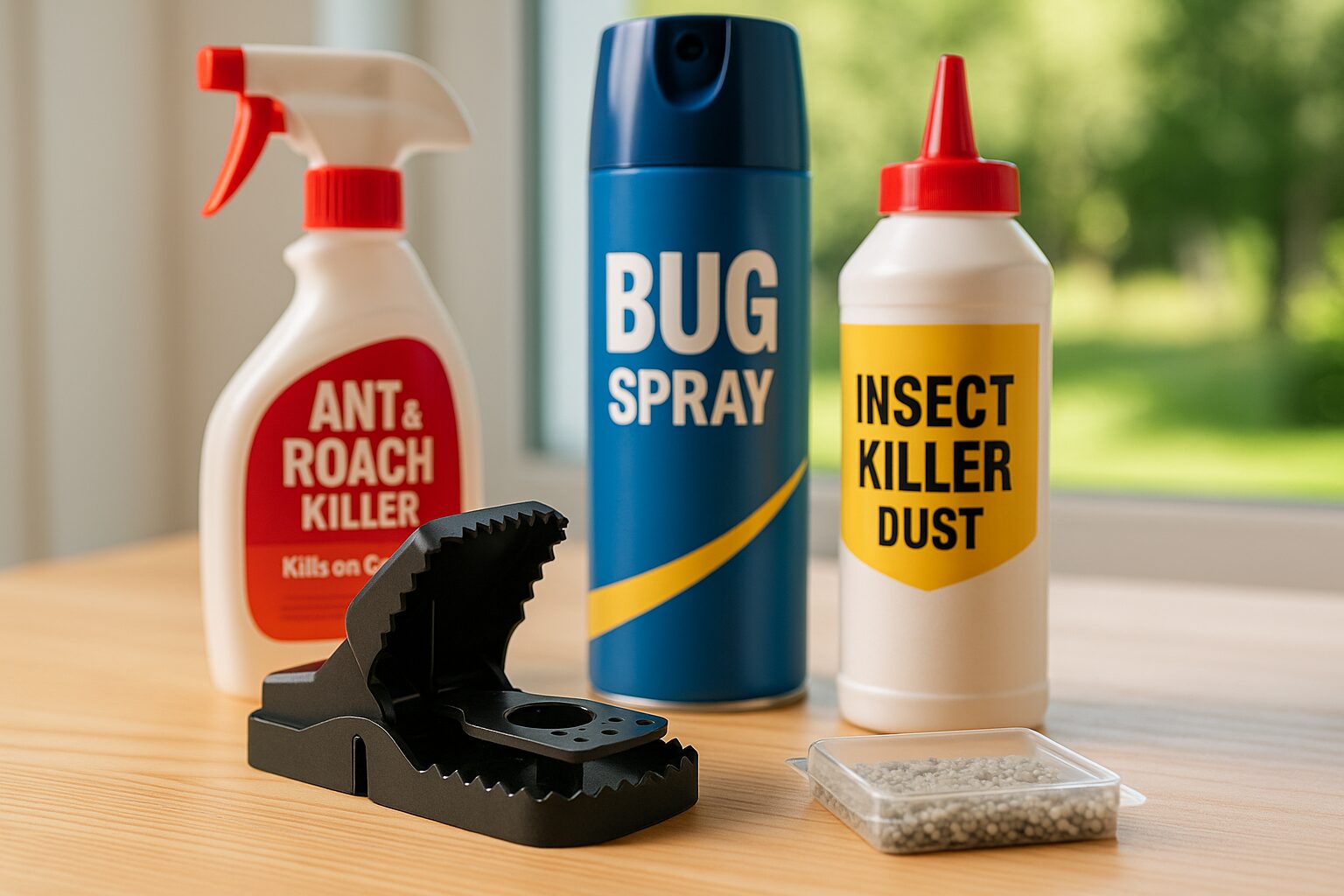
Hardware store shelves are packed with sprays, powders, traps, and ultrasonic devices promising fast, cheap pest control. For homeowners, it’s tempting to try a do-it-yourself solution before calling a professional. Sometimes that works. But very often, DIY pest control treats the symptom — not the infestation. When that happens, the problem doesn’t go away; it grows quietly behind walls, in crawlspaces, and under foundations until it becomes harder and more expensive to fix.
Understanding why DIY methods fail — and when they’re actually appropriate — helps homeowners avoid wasted time, repeated treatments, and escalating pest problems.
Why DIY Pest Control Seems to Work at First
Many store-bought products are designed for quick visible results. A spray kills ants you see on the counter. A trap catches a mouse. A fogger knocks down flies in a room. This creates the impression that the problem is solved.
But in most infestations, what you see is only a small fraction of the population. The nest, colony, breeding area, or primary entry point is usually hidden. Killing the visible pests without addressing the source often leads to a short period of relief followed by a fast return — sometimes worse than before.
The Most Common Reasons DIY Pest Control Fails
DIY pest control usually falls short for a few key reasons:
- It doesn’t eliminate the nest or colony
- It doesn’t address how pests are getting inside
- It’s often under-dosed or applied incorrectly
- It doesn’t account for pest life cycles
- It doesn’t adapt when pests change behavior
For example, many ant species simply split their colony when threatened. Spraying visible ants can actually cause the infestation to spread to new areas of the home rather than eliminating it.
Why Traps Alone Rarely Solve Rodent Problems
Traps are one of the most common DIY tools for mice and rats. While traps can remove individual rodents, they don’t stop new ones from entering. Most rodent infestations are supported by:
- Gaps along siding
- Utility line penetrations
- Crawlspace vents
- Roofline and fascia openings
- Worn door sweeps
Without sealing these entry points, trapping becomes an endless cycle. You may catch a few mice, but the population continues to replenish from outside.
Store-Bought Sprays vs. Professional Products
Consumer insecticides are intentionally designed to be lower strength to reduce misuse and health risks. This means they often kill on contact but have limited residual effect. Professional products, on the other hand, are formulated to:
- Remain active for extended periods
- Reach hidden harborages
- Disrupt reproduction cycles
- Target species-specific behavior
DIY sprays may knock down visible insects, but they rarely provide the lasting control needed for true elimination.
Why Pest Behavior Defeats DIY Approaches
Pests are highly adaptive. Cockroaches, rodents, ants, and spiders all change behavior when pressure is applied. DIY treatments often push pests deeper into walls, ceilings, and voids, where they continue breeding out of sight.
This is why homeowners sometimes report that after spraying, they see “even more” pests days or weeks later. The activity didn’t increase — it simply moved.
When DIY Pest Control Is Often Enough
DIY methods aren’t always useless. There are situations where they can be effective and appropriate.
DIY control may be enough when:
- The issue is new and isolated
- There is no nesting or infestation established
- Entry points are obvious and easily sealed
- The pest pressure is seasonal and minimal
- No health or safety risks are present
Examples include:
- A few ants near a door in spring
- A single wasp scouting a siding gap
- An occasional spider indoors
In these cases, proper cleanup, sealing, and limited product use can be perfectly reasonable.
When DIY Becomes a Liability Instead of a Solution
DIY becomes risky when:
- You have recurring activity
- Pests return within days or weeks
- You hear movement in walls or ceilings
- You see droppings, grease marks, or nesting material
- The infestation involves rodents, cockroaches, or stinging insects
In these situations, DIY efforts often delay proper treatment while the infestation expands. That delay frequently turns a manageable problem into a major remediation project.
The Hidden Costs of Repeated DIY Attempts
DIY pest control feels cheaper because the upfront cost is low. But repeated failure creates hidden expenses:
- Replacing damaged insulation or wiring
- Repairing chewed pipes or air ducts
- Removing contaminated attic debris
- Addressing moisture and mold caused by nesting
- Structural wood damage from carpenter ants
What began as a $20 spray often becomes a $2,000 problem.
Why Professional Pest Control Works Differently
Professional pest control is built around:
- Full property inspection
- Species-specific identification
- Targeted treatment plans
- Entry-point exclusion
- Ongoing monitoring and prevention
Rather than reacting to what you see, professionals eliminate what’s causing it. This approach stops the infestation at its source instead of playing pest “whack-a-mole.”
The Smart Approach: DIY First, Professional When Needed
There is nothing wrong with trying DIY pest control once, for a small, isolated issue. The key is knowing when to stop and when to escalate. If pests return quickly, multiply, or begin appearing in multiple areas of the home, it’s no longer a DIY situation.
At New Day Pest, we help homeowners avoid unnecessary treatments while ensuring infestations don’t quietly spread into expensive structural problems.