If you’ve ever found droppings in a pantry, heard scratching in the walls, or spotted a mouse dart across the floor at night, the first question is always the same: How did it get in here? What surprises most homeowners is just how small an opening a rodent needs to enter — and how many vulnerable access points most homes already have without anyone realizing it.
Understanding where rodents get in is the single most important step in stopping an infestation for good. Traps alone may catch a few mice, but unless those entry points are sealed, new rodents will keep replacing them.
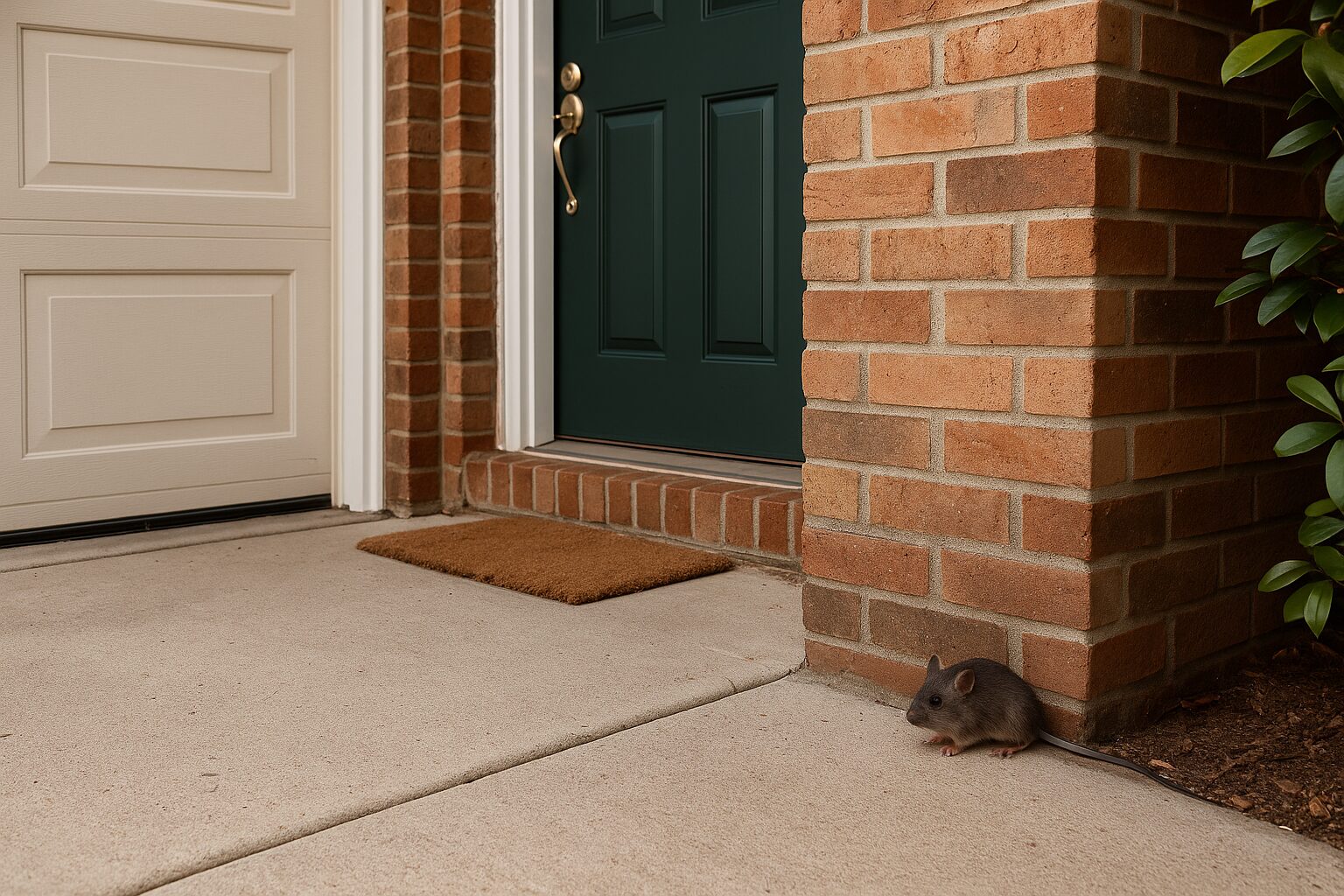
How Small of an Opening Do Rodents Really Need?
Mice and rats are built for squeezing through tight spaces. Their skeletons are flexible, and their skulls determine the minimum opening they need to pass through.
As a general rule:
- Mice can enter through gaps as small as ¼ inch (about the size of a pencil)
- Rats can enter through openings as small as ½ inch
What looks like an insignificant crack to a homeowner is a wide-open doorway to a rodent.
Why Homes Attract Rodents in the First Place
Rodents don’t enter homes by accident — they’re actively searching for:
- Warmth, especially in fall and winter
- Food, even crumbs or pet kibble
- Water, from condensation, leaks, or drains
- Shelter, free from predators
Once they find a reliable source of all four, they rarely leave on their own.
The Most Common Rodent Entry Points (Where to Look First)
Rodents follow consistent travel paths around the exterior of a structure. These are the highest-risk entry points professionals check first:
1. Garage Doors & Door Seals
Worn weather stripping and small gaps beneath garage doors are one of the most common rodent access points. Garages often provide food, shelter, and quiet nesting areas.
2. Utility Line & Pipe Penetrations
Where cables, gas lines, water pipes, and AC lines enter the home, small gaps often remain unsealed or degrade over time.
3. Crawlspace Vents
Damaged, rusted, or poorly screened vents are prime entry points — especially in older homes.
4. Rooflines, Fascia & Attic Vents
Rats are excellent climbers. Overhanging tree branches, fence lines, and vines give them direct access to rooflines and attic vents.
5. Foundation Cracks & Expansion Joints
Even tiny cracks in concrete or separation around foundation seams can allow rodents to enter walls or crawlspaces.
6. Siding Gaps & Corner Trim
Loose siding, warped trim boards, and corner seams often conceal narrow gaps rodents use repeatedly.
7. Basement Windows & Window Wells
Window wells trap debris and moisture, making them ideal entry zones if screens or seals fail.
How Rodents Travel Once Inside
Once a rodent enters, it immediately begins establishing travel routes inside the structure. These paths often run:
- Along wall edges
- Inside wall voids
- Along plumbing lines
- Across attic insulation
- Through crawlspaces
Rodents avoid open spaces whenever possible. That’s why homeowners may hear activity at night but rarely see the animals during the day.
The Telltale Signs of Rodent Entry
Even if you haven’t seen a mouse or rat yet, early evidence usually appears first near entry points.
Common warning signs include:
- Small black droppings
- Gnaw marks on wood, plastic, or wiring
- Grease rub marks along baseboards
- Shredded paper, insulation, or fabric
- Musky, urine-like odors
- Noises in walls or ceilings at night
The longer these signs go unaddressed, the more established the infestation becomes.
Why Trapping Without Sealing Rarely Works
Many homeowners start with traps, and catching rodents can feel like progress. But without sealing entry points, trapping becomes a revolving door.
Here’s why:
- Rodents breed quickly
- New rodents replace trapped ones
- Outdoor populations refill indoor spaces
- The original access point remains active
True control requires exclusion first, trapping second — not the other way around.
How Rodents Damage Homes From the Inside Out
Once inside, rodents cause damage that often goes unseen for months or years:
- Chewed electrical wiring (fire risk)
- Shredded insulation (energy loss)
- Damaged ducting
- Contaminated storage areas
- Urine-soaked framing and drywall
- Structural wood damage
What starts as a small entry point can turn into thousands of dollars in repairs when left untreated.
Why Fall Is the Most Dangerous Season for Rodent Entry
Rodent intrusions spike dramatically in fall as outdoor temperatures drop. Mice and rats begin aggressively seeking indoor shelter before the first hard frost. Homes that weren’t sealed during summer become high-value targets.
By winter, many infestations are already fully established behind walls.
How Professionals Locate Hidden Entry Points
Rodent exclusion requires a trained eye. Professionals inspect:
- Rooflines and attic vents
- Crawlspace foundations
- Utility penetrations
- Door thresholds
- Siding seams
- Drain and plumbing access points
They also look for subtle signs of active use like rub marks, droppings, and grease trails that homeowners usually miss.
The Smart Plan: Exclusion + Targeted Trapping
The only long-term solution to a rodent infestation is a two-part approach:
- Seal the structure completely
- Remove rodents already inside
When exclusion is done correctly, trapping becomes a short-term cleanup instead of a never-ending cycle.
Early Action Saves Thousands in Repairs
Rodent problems never improve on their own — they only grow. The sooner entry points are sealed and activity is addressed, the easier and less expensive the solution becomes.
At New Day Pest, we specialize in identifying hidden entry points, sealing structures correctly, and eliminating rodents at the source — not just the symptoms.