When most homeowners think about rodent problems, they picture chewed food containers, scratching noises in the walls, or droppings in the pantry. What they don’t usually think about is fire risk. But rodents are one of the leading hidden causes of electrical fires in residential homes — and the danger grows the longer they go undetected.
Mice and rats chew constantly. It’s how they keep their teeth short, build nests, and explore their surroundings. Unfortunately, modern homes are full of the very materials rodents love to gnaw on: insulation, plastic, and especially electrical wiring. When wiring becomes damaged or exposed, the risk of overheating, arcing, and ignition increases dramatically.
For this reason, pest control isn’t just about comfort or sanitation — it’s a core part of fire prevention.
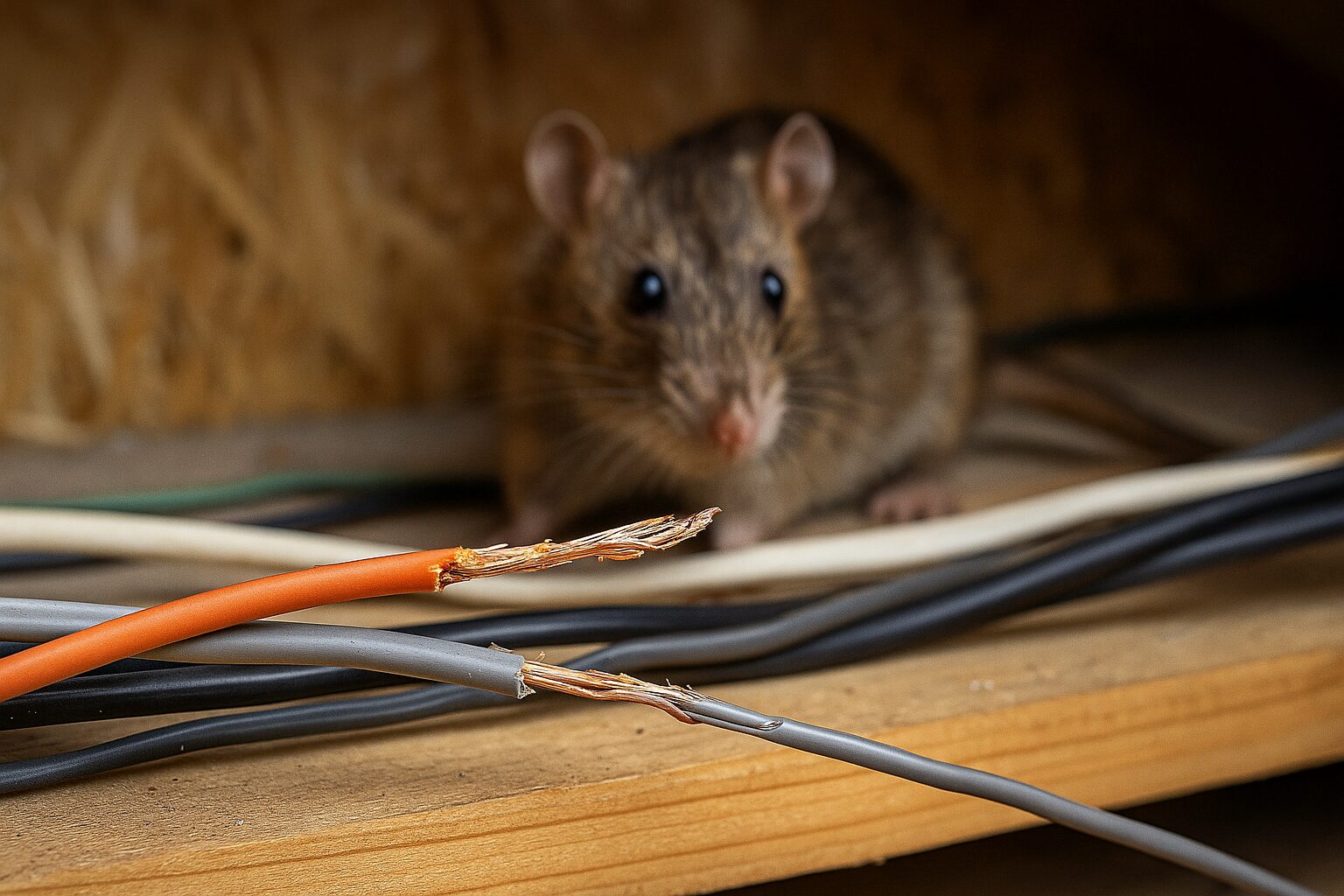
Why Rodents Chew on Wiring
Rodents have teeth that never stop growing. To prevent overgrowth, they must gnaw daily, and electrical wires offer a firm, accessible surface. But there are additional reasons they target wiring specifically:
- Warmth: Wires running through walls and attics create mild, inviting heat.
- Nest building: Rodents chew insulation off wires to use as nesting material.
- Path creation: Wires often run along travel routes inside walls, making them convenient targets.
- Instinct: Rodents explore unfamiliar objects with their teeth, not just their claws.
Unlike chewing on wood or cardboard, chewing on electrical wiring creates a dangerous combination of exposed copper and flammable materials.
How Damaged Wiring Leads to House Fires
When insulation on a wire is compromised, several things can happen inside the wall or attic:
1. Electrical Arcing
Exposed wires can spark, especially if damaged sections touch each other or metal framing. Arcing can ignite insulation, dust, or wood.
2. Overheating
Damaged wires can carry uneven electrical loads. Over time, overheating can ignite surrounding materials.
3. Short Circuits
Shorts can trip breakers or overload circuits, increasing heat and stressing your electrical system.
4. Ignition of Rodent Nesting Material
Rodents frequently build nests out of:
- Insulation
- Shredded paper
- Dried vegetation
- Fabric scraps
These materials are highly flammable and often packed tightly around wiring.
Many electrical fires attributed to “faulty wiring” actually began with rodent damage long before the first spark.
The Parts of the Home Most at Risk
Rodents gravitate toward quiet, hidden areas that homeowners rarely check. These same areas are filled with electrical wiring.
High-risk zones include:
- Attics
- Crawlspaces
- Wall voids
- Basements
- Garage ceilings
- Behind appliances
- HVAC and water heater enclosures
Because activity is out of sight, damage often becomes severe before anyone notices a problem.
Signs You May Have Rodent-Related Electrical Damage
Even if you don’t see a rodent, subtle symptoms often reveal hidden activity:
- Flickering or dimming lights
- Tripped breakers without a clear cause
- Burning or “hot” smells near outlets or walls
- Strange noises when appliances turn on
- Chewed or frayed wires visible in attics or crawlspaces
- Rodent droppings or nesting material near electrical runs
If you notice more than one of these signs, you should treat it as a safety concern, not just a pest problem.
Why DIY Pest Control Isn’t Enough for Wiring Protection
Homeowners often begin with traps or bait stations, but these approaches seldom address the underlying cause. Rodents will continue to enter the home until entry points are sealed, and even a few surviving rodents can cause significant wiring damage.
DIY methods also fail to:
- Inspect hidden electrical pathways
- Identify rodent travel routes inside the home
- Locate nests tucked behind wiring or outlets
- Prevent new rodents from entering and chewing again
By the time the average homeowner realizes DIY didn’t work, the damage has usually progressed.
How Professionals Protect Homes From Both Rodents and Fire
Effective fire-prevention pest control requires a two-part approach:
1. Rodent Exclusion (Sealing Entry Points)
Professionals locate and seal gaps that rodents use to enter, including:
- Crawlspace vents
- Rooflines and attic seams
- Foundation cracks
- Siding gaps
- Door sweeps
- Utility penetrations
Sealing the structure stops the ongoing cycle of damage.
2. Rodent Removal & Monitoring
Trapping and targeted placement of professional-grade stations remove active rodents and provide long-term monitoring to ensure they do not return.
3. Inspection of Damage-Prone Areas
Pest control teams often work closely with electricians when they discover wiring that has already been compromised.
Why Early Detection Saves Money — and Prevents Disaster
Rodent infestations escalate quickly. A small family of mice can turn into dozens within months, and each new rodent means additional chewing, nesting, and risk. Addressing the issue early prevents:
- Electrical fires
- Appliance failure
- Heating and cooling system damage
- Insulation loss
- Structural harm
What begins as a few small entry points can become thousands of dollars in repairs if ignored.
Rodent Control Protects Your Home Inside and Out
Rodents aren’t just a nuisance — they’re a genuine safety threat. Protecting your home from them is one of the simplest and most effective ways to reduce fire risk. When you eliminate rodent access and remove active infestations, you safeguard not just your wiring, but your entire home.
At New Day Pest, we specialize in identifying rodent entry points, removing active infestations, and helping homeowners protect their electrical systems through thorough, targeted prevention strategies.