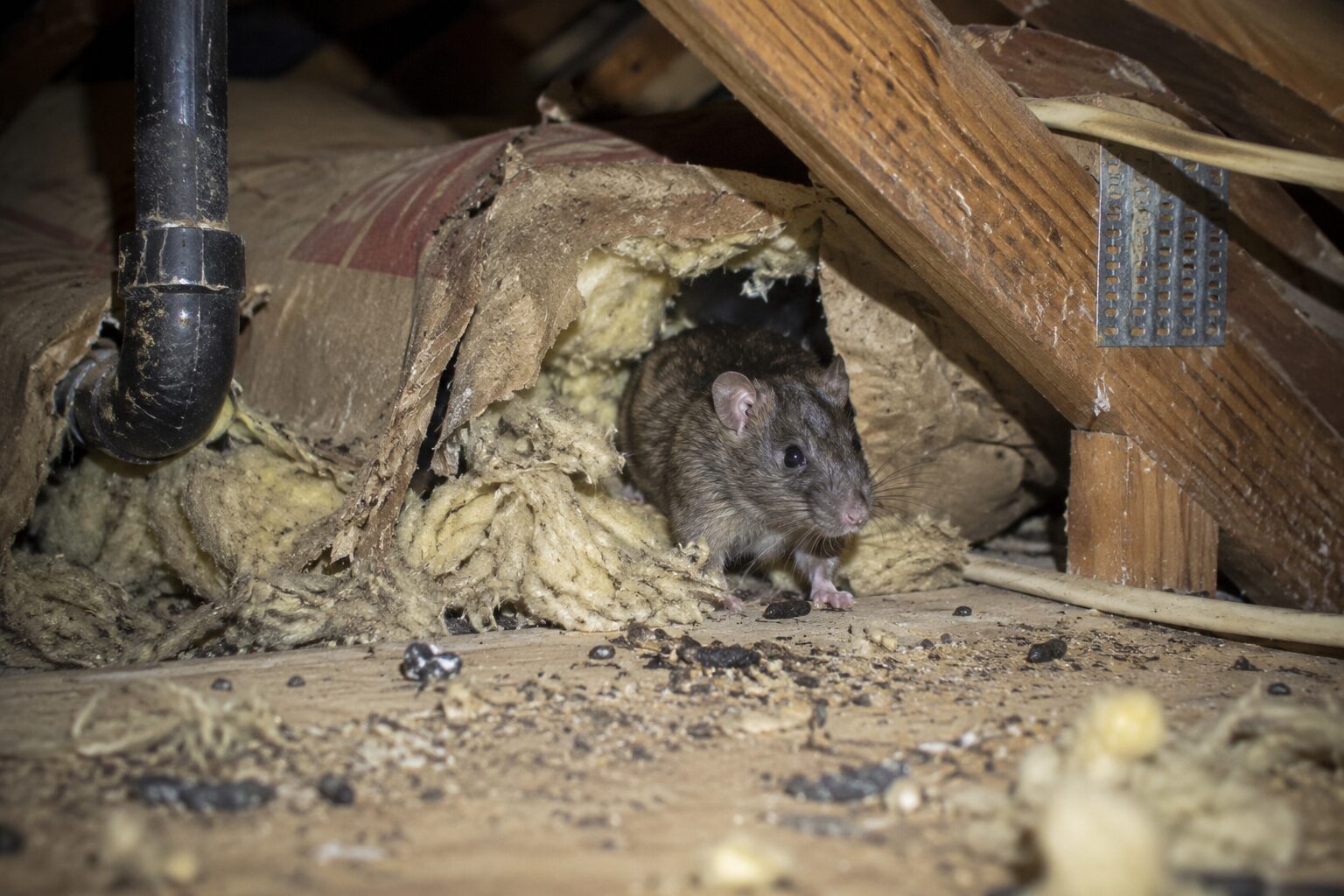
When homeowners think about rodent infestations, they often picture a mouse running across the kitchen floor or scratching noises inside the walls. However, some of the most serious rodent problems occur in areas people rarely see — crawlspaces and attics.
These hidden spaces provide ideal environments for rats and mice because they are dark, warm, protected, and often undisturbed for long periods of time. Once rodents establish themselves in crawlspaces or attics, they can create widespread contamination, structural damage, insulation destruction, and even fire hazards before homeowners realize how severe the infestation has become.
Because these areas are out of sight, rodent problems often grow quietly for weeks or months before obvious warning signs appear inside the home.
Crawlspaces and Attics Are Ideal Rodent Environments
Rodents are constantly searching for safe places to nest and reproduce.
Crawlspaces and attics provide many of the conditions rats and mice prefer, including:
- Warmth
- Shelter from predators
- Darkness
- Minimal disturbance
- Access to insulation and nesting materials
- Nearby food and water sources
In the Pacific Northwest, wet and cold weather often drives rodents indoors during fall and winter months. Homes become highly attractive shelters during seasonal weather changes.
Once rodents enter these spaces, they may begin nesting almost immediately.
Rodents Reproduce Quickly in Hidden Areas
One reason crawlspace and attic infestations become so severe is that rodents reproduce rapidly.
A small rodent problem can quickly grow into a much larger infestation because rats and mice breed frequently and often remain hidden while populations expand.
By the time homeowners notice:
- Scratching noises
- Odors
- Droppings
- Damage
multiple generations of rodents may already be living inside the structure.
Because crawlspaces and attics are rarely inspected regularly, infestations often continue growing undetected for extended periods of time.
Rodents Damage Insulation
One of the most common problems rodents create in attics and crawlspaces is insulation damage.
Rats and mice tear apart insulation to:
- Build nests
- Create tunnels
- Move throughout the space
- Stay warm
Over time, rodent activity can compress and contaminate insulation, reducing its effectiveness significantly.
Damaged insulation may lead to:
- Reduced energy efficiency
- Higher heating and cooling costs
- Unpleasant odors
- Widespread contamination
Rodent urine and droppings often soak into insulation materials, making full replacement necessary in severe infestations.
Rodents Create Fire Hazards
One of the most serious dangers associated with rodents is electrical damage.
Rats and mice constantly chew because their teeth continue growing throughout their lives. Unfortunately, they often gnaw on electrical wiring inside crawlspaces, attics, and wall voids.
Chewed wiring may lead to:
- Electrical shorts
- System failures
- Damaged appliances
- Increased fire risk
This damage is often hidden behind walls or insulation where homeowners cannot easily see it.
In some cases, rodent-related electrical damage may remain unnoticed until a major problem occurs.
Contamination Can Spread Throughout the Home
Rodent infestations create serious sanitation concerns.
Rats and mice leave behind:
- Droppings
- Urine
- Nesting debris
- Hair
- Food contamination
As rodents move through crawlspaces and attics, contamination can spread across large areas of the structure.
Air movement through HVAC systems and attic ventilation may also circulate contaminated particles throughout the home.
Large infestations can create strong odors and unsanitary conditions that affect overall indoor air quality.
Rodents Often Attract Other Pests
Rodent infestations frequently create secondary pest problems.
Rodents may carry:
- Fleas
- Mites
- Ticks
- Parasites
Additionally, rodent nesting materials and contamination can attract insects and other pests seeking food or shelter.
This is one reason why untreated infestations often become progressively more complicated over time.
Structural Damage Can Become Expensive
Rodents do more than simply contaminate spaces — they can physically damage parts of the home as well.
Common structural damage includes:
- Chewed wood
- Damaged vapor barriers
- Torn ductwork
- Destroyed insulation
- Damaged vent screens
- Gnawed pipes
- Compromised air seals
Over time, these problems may contribute to:
- Moisture issues
- Energy loss
- HVAC inefficiency
- Structural deterioration
The longer rodents remain inside crawlspaces and attics, the more expensive repairs often become.
Rodents Enter Through Surprisingly Small Openings
Many homeowners are shocked by how easily rodents enter homes.
Common access points include:
- Roof gaps
- Crawlspace vents
- Utility penetrations
- Gaps beneath siding
- Garage openings
- Roofline intersections
- Damaged screens
- Foundation cracks
Mice can fit through openings the size of a dime, while rats can squeeze through surprisingly narrow spaces as well.
Once rodents discover an accessible entry point, they often continue using it repeatedly unless proper exclusion work is completed.
Warning Signs of Crawlspace or Attic Rodents
Because rodents stay hidden, homeowners should watch for subtle signs such as:
- Scratching noises at night
- Strong musky odors
- Droppings
- Gnaw marks
- Insulation disturbance
- Pet behavior changes
- Visible entry holes
- Smudge marks near openings
These warning signs should never be ignored, especially during colder months when rodent activity often increases indoors.
Trapping Alone Usually Isn’t Enough
One of the biggest misconceptions about rodent control is that trapping alone solves the problem.
While trapping helps reduce populations, long-term control usually requires:
- Exclusion work
- Sealing entry points
- Crawlspace repairs
- Sanitation cleanup
- Insulation replacement when necessary
- Ongoing monitoring
Without closing access points, new rodents often continue entering the structure even after trapping efforts.
Professional Inspections Help Identify Hidden Problems
Because crawlspaces and attics are difficult to access and inspect properly, professional evaluations are extremely valuable.
Pest professionals can identify:
- Active nesting areas
- Entry points
- Hidden contamination
- Structural damage
- Conditions attracting rodents
Early intervention helps prevent infestations from becoming much larger and more destructive.
At New Day Pest, professional rodent inspections, exclusion work, and crawlspace evaluations help homeowners throughout the Pacific Northwest protect their homes from the hidden dangers rodents create inside attics and crawlspaces.
Rodent infestations often begin quietly, but addressing the problem early can help prevent major contamination, expensive repairs, and long-term structural damage.