If you’ve ever come into the kitchen in the morning and found a trail of tiny ants marching toward a crumb on the floor, you’re not alone. Ants are among the most common household pests—and some of the most persistent. While their presence can be frustrating, understanding what draws ants inside is the first step to keeping them out. Let’s break down what attracts ants to your home and practical ways you can prevent an ant invasion.
Why Ants Invade Homes
Ants are social insects, always on the hunt for food, water, and shelter. When they find these essentials inside your home, they’re quick to move in—sometimes in huge numbers. Here are the main reasons ants invade:
1. Food Sources
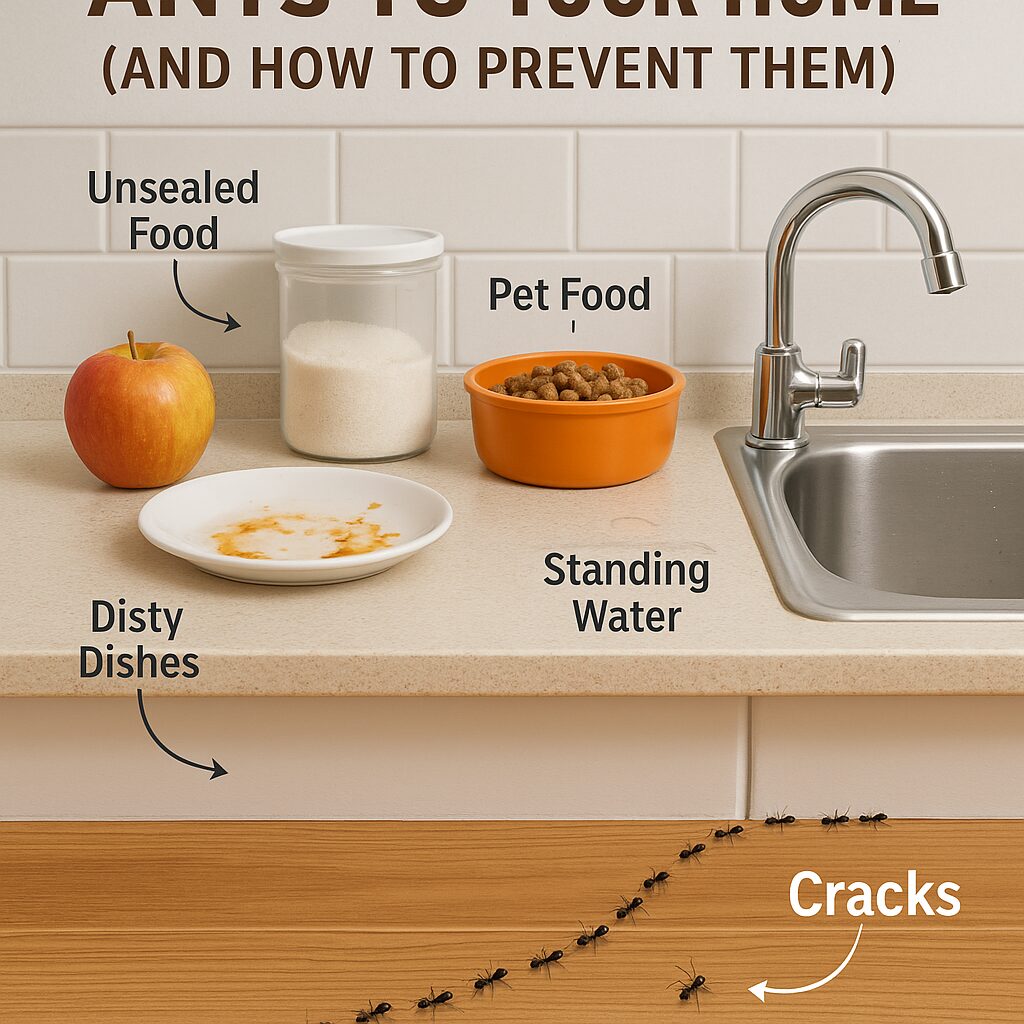
Ants have a keen sense of smell and can detect even the smallest food particles. Sweet foods are especially attractive, but proteins, fats, and crumbs of any kind will draw them in. Pet food, sticky spills, bread crumbs, and even the residue left on dirty dishes are ant magnets.
2. Water and Moisture
Like all living creatures, ants need water to survive. Leaky pipes, dripping faucets, damp basements, and condensation around windows can all provide the moisture ants need, especially during dry spells outside.
3. Easy Access
Cracks in foundations, gaps around windows and doors, and utility line entry points make it easy for ants to sneak inside. Some species, like carpenter ants, can even chew through wood to make their own entryways.
4. Shelter and Nesting Sites
Certain ants will nest indoors, especially if there’s easy access to warmth and protection. Wall voids, behind baseboards, under floors, and even inside appliances can all become ant homes.
The Most Common Attractants (and Where to Find Them)
- Uncovered Food: Sugar bowls, syrup bottles, fruit bowls, and pet food left out overnight.
- Dirty Dishes and Counters: Even invisible traces of food or grease can attract ants.
- Garbage and Recycling: Overflowing or uncovered bins, especially those with food residue.
- Standing Water: Sink basins, wet sponges, plant saucers, and even condensation on pipes.
- Accessible Entry Points: Unsealed cracks, old caulking, damaged weather stripping, or holes around plumbing.
How to Prevent Ants from Invading
The good news: ant invasions are preventable! Here’s how to keep these tiny intruders outside, where they belong:
1. Keep Things Clean
- Wipe down counters and sweep floors daily, especially in kitchens and dining areas.
- Promptly clean up spills, crumbs, and sticky spots.
- Store food in sealed containers, including pet food.
2. Fix Moisture Problems
- Repair leaky pipes, faucets, and appliances.
- Use a dehumidifier in damp areas like basements.
- Don’t leave standing water in sinks or pet bowls overnight.
3. Seal Entry Points
- Inspect the foundation, windows, and doors for cracks or gaps. Seal them with caulk or weather stripping.
- Check that screens are intact and fit tightly.
- Use door sweeps on exterior doors.
4. Take Out the Trash
- Empty trash and recycling regularly.
- Rinse out bottles and cans before recycling.
- Keep bins covered and clean.
5. Tend to the Yard
- Trim branches and shrubs away from the house to avoid giving ants a bridge inside.
- Clear away leaf litter and debris from the foundation.
6. Act Quickly if You See Ants
- If you spot a few ants, don’t ignore them! They’re likely scouts looking for food and water sources.
- Clean the area with soapy water to erase the trail pheromones.
- Track their path to locate and eliminate the entry point.
When to Call a Professional
If you’ve tried these steps but still see ants regularly—or if you suspect a nest inside your walls—it’s time to call a pest control professional. Some ant species, like carpenter ants or odorous house ants, can be stubborn and may require targeted treatments. A professional can identify the species, locate the nest, and apply safe, effective solutions.
Don’t let ants turn your home into theirs.
Contact New Day Pest for reliable, eco-friendly ant control and prevention tips. With a little effort and expert help, you can keep your home ant-free—no matter the season!